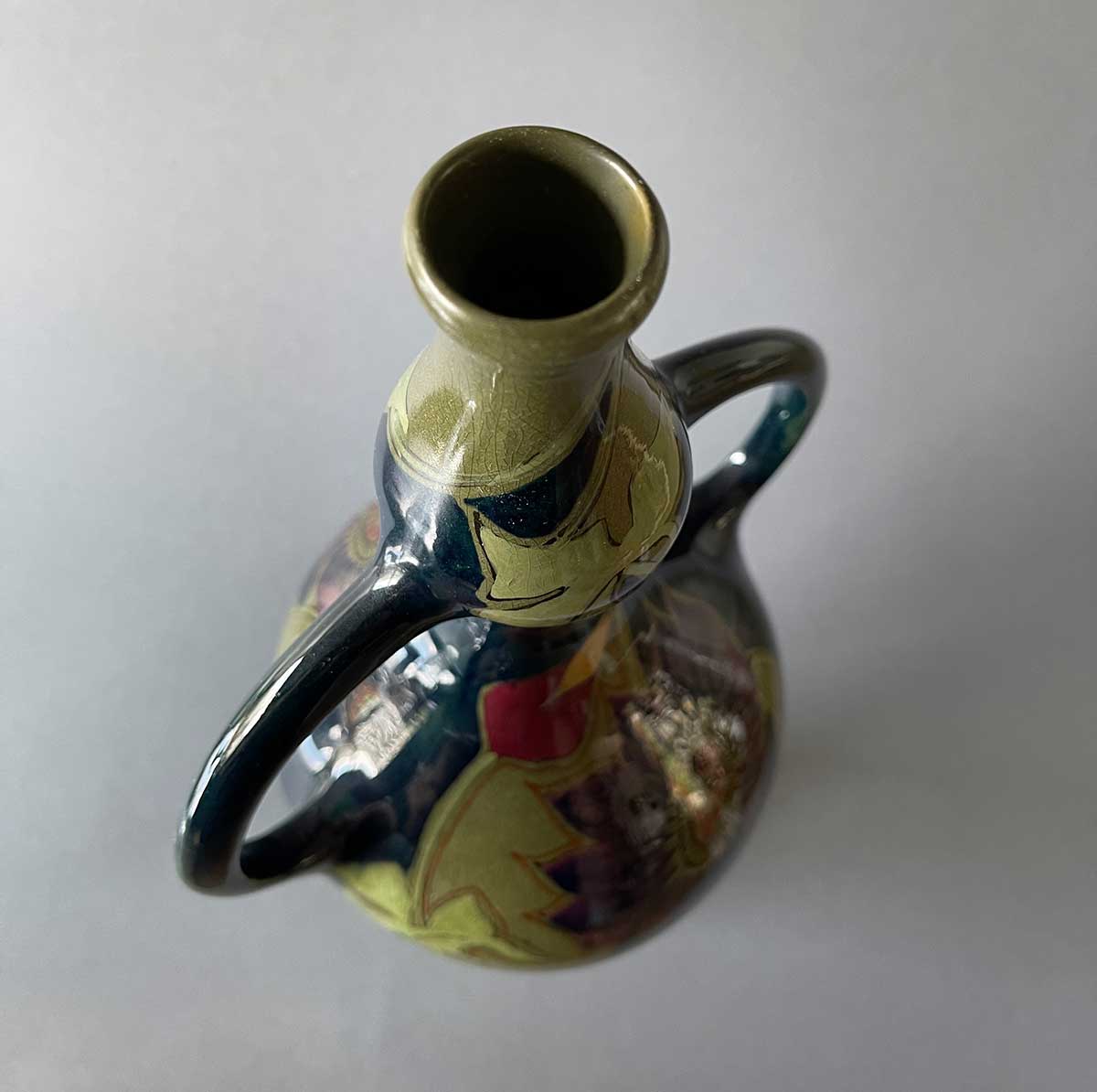

Are you an heir who has inherited a collection of Dutch antique decorative pottery? Or are you a collector of Dutch ‘plateel’ pottery looking to downsize, curate or simply declutter your collection? We assist in the liquidation and sale of entire or partial collections of Dutch antique pottery.
Many collectors spend years carefully building their collections. This process typically unfolds in stages: starting out, expanding, refining one’s focus, curating and downsizing. At times, you may wish to part with a selection of your collection to create more space. It is also worth considering what will happen to your collection in the future. It would be a great pity if heirs were to discard a collection of valuable Dutch antique pottery as trash or donate it to a thrift store. We help collectors and their heirs sell collections of Dutch antique decorative pottery—known as plateel. Our primary focus is on Dutch art pottery from the Art Nouveau period (1890–1910) produced by the following factories:
- Rozenburg, The Hague
- Brantjes, Purmerend
- Zuid-Holland, Gouda
- Holland, Utrecht
- Distel, Amsterdam
- De Kroon, Noordwijk
- Haga, Purmerend
- Amphora, Oegstgeest
Analysis and Valuation
The first step is to assess the caliber of the collection. Dutch plateel was produced between 1880 and 1960, and the value of individual pieces can range from a few euros to several thousand euros. The price is heavily influenced by the object’s age, the factory where it was made, its model, its decorative design and the specific artist who painted it. The condition of the objects also plays a role: is the object in pristine condition, damaged, or restored?
Current market prices are significantly lower than they were decades ago. A collector may have paid a high price for a piece of plateel in the past, yet that same vase might fetch very little in today’s market. It is therefore important to conduct a thorough assessment of the collection’s quality and value beforehand. We do this in two ways:
- First, we examine photographs of the collection.
- If necessary, we will visit in person to inspect the pieces more closely.
Developing a sales plan
Following the analysis and valuation, we provide advice on how to sell the plateel collection. If the objects have a low market value, we advise the heirs or the collector to sell them privately, for example through online platforms like eBay or Catawiki. This is often the case for plateel produced after 1920. From around 1910 onwards, many Dutch plateel factories began mass-producing decorative and functional pottery. These items now hold very little value. Unfortunately, there is a shrinking number of collectors for this type of plateel. Value is also typically low for pieces that are heavily damaged.
Read more about the value of Dutch plateel on this page: WHAT IS PLATEEL WORTH?
If the valuation is too low, it is not practical for us to acquire the collection or handle its sale on your behalf. However, if the plateel collection holds significant value, we would be happy to assist you in selling the items. There are two ways to do this:
Sale via ArtNouveauPlateel and our own network
We can purchase the items directly or sell them on consignment through the ArtNouveauPlateel.nl webshop. In the case of a direct purchase, we will offer you an amount equivalent to approximately 50% to 60% of the market value. We will come to collect the items and provide immediate payment.
For sales on consignment, we charge a commission on each sale: 27.5% for sales up to 1,500 euros, and 25% for items that fetch more than 1,500 euros. We can also arrange for items to be restored if it enhances their sale potential.
We will collect the items, inspect and examine them, take photographs, and list them in our webshop. We also offer them to our own network of clients—many of whom are passionate collectors—whenever the items align with what they are looking for.
Read more about direct purchase or consignment sales: ON THIS PAGE.
The advantage is that you no longer have to worry about the items. The potential drawback is that the sale may take some time; however, the costs associated with this method are lower than those incurred when selling through an auction house.
Sales through auction houses
Another option is for us to guide you through the sale process via the renowned auction houses. We will collect the items, pack everything with great care, and deliver the objects to the auction house in preperation for the sale. As different auction houses specialize in specific art movements, part of our consulting includes determining which auction house is the best fit for your collection. For this service, we charge a fee of 5% to 10% of the final auction sale price (the hammer price plus the buyer’s premium).
The advantage is that you no longer have to worry about the items. The drawback is that the auction houses also take a share of the proceeds. On average, auction houses charge the seller 15% and the buyer 30% of the ‘hammer price’, a fee known as the buyer’s premium. Consequently, nearly half of the total proceeds goes to the auction house.
Get in Touch
Are you interested in discussing the various options for selling collections, whether they are part of an estate or otherwise? Please get in touch. You can send an email to carolien@artnouveauplateel.nl. It is helpful if you include a few photographs as attachment to your e-mail, as this will allow us to provide specific advice on the best strategy for the sale.